
Performance
The update makes geometry and texture reuse easier. For a modular character, the main costs are visible mesh sections, texture memory, animation and cloth simulation.
Reuse geometry#
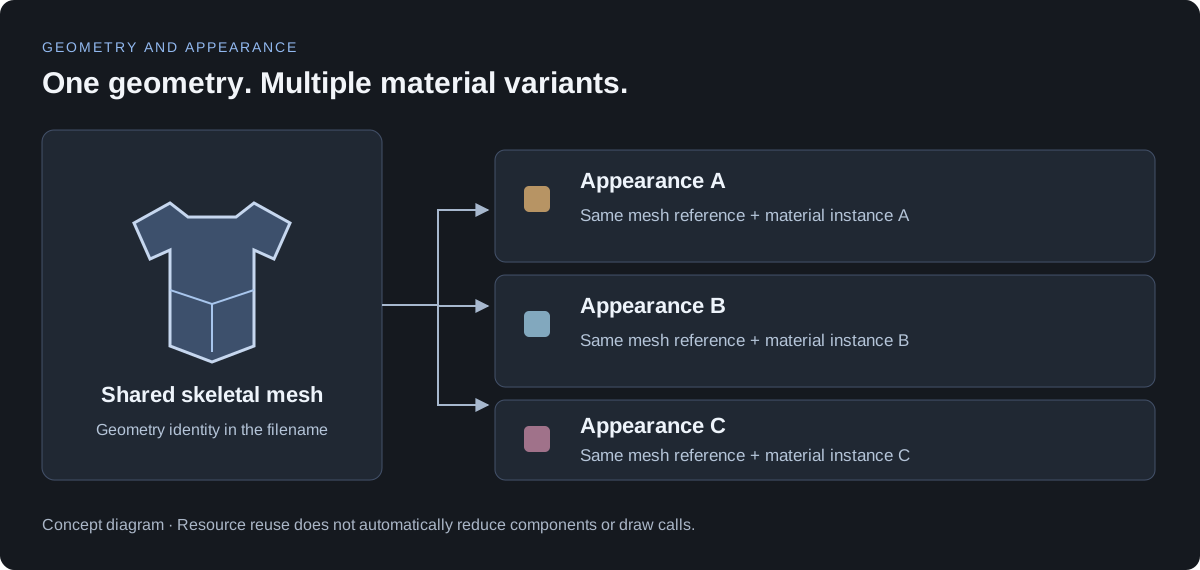
Asset names now separate the model identity from its appearance. When variants have the same geometry, UVs, skinning and cloth setup, keep one mesh reference and apply the chosen material overrides with Set Material.
This reduces the mesh resources needed for different looks. Separate rendered components and material sections still have their own cost.
Shared textures#
More than 40 texture assets were removed through selected Normal/ORM reuse and consolidation of duplicated resources. Shared atlases are also used across designs and packs.
Some Normal and ORM maps remain separate to preserve surface detail. Their further consolidation is an optional quality tradeoff for your game.
Texture size limits#
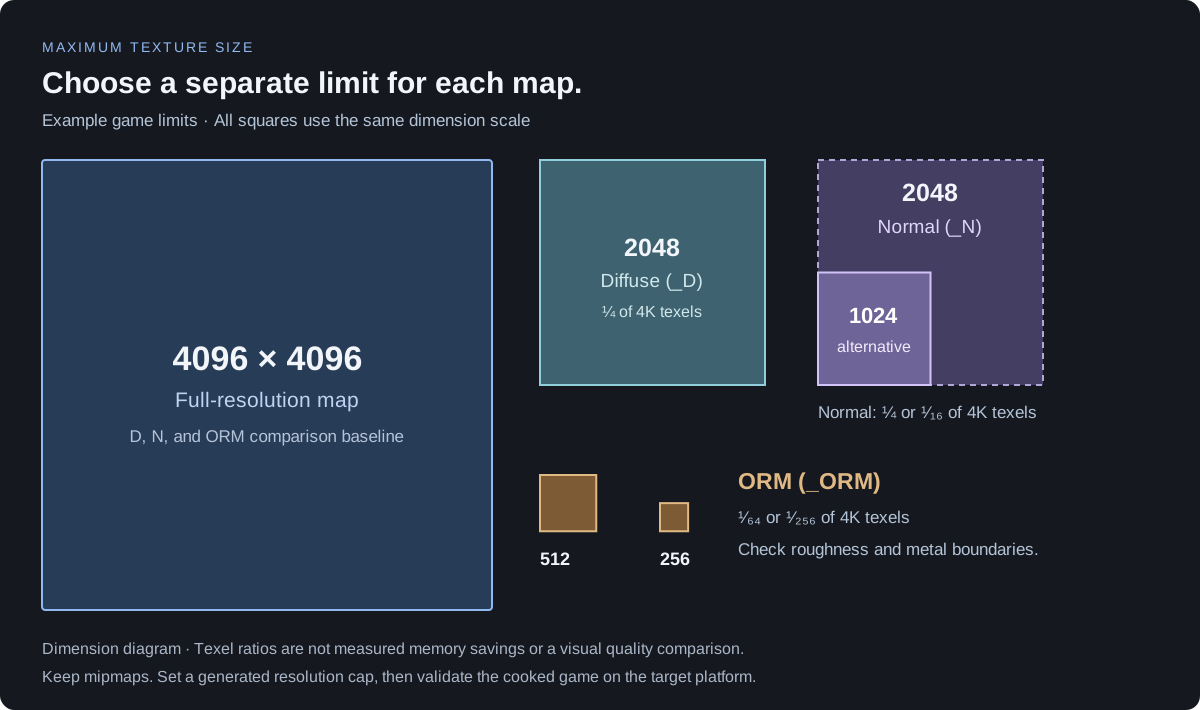
Examples used in Reign of Guilds:
| Map | Example maximum size |
|---|---|
Base color _ |
2048 |
Normal _ |
1024–2048 |
ORM _ |
256–512 |
These are tuning examples, not defaults for every supplied texture. Rebuild, cook and check the result on your target platform.
| Setting | Effect | Packaged game |
|---|---|---|
| Maximum Texture Size | Caps generated texture resolution | Rebuild and cook to apply the cap |
| Texture / group LOD Bias | Removes highest-resolution usable mips | Unreachable mips can be excluded during cooking |
Runtime r. |
Changes mips requested by streaming | Does not shrink installed texture data |
| Mip preview / material sampling bias | Changes preview or sampled mip | Does not remove texture data from the package |
Texture comparisons#
The provided captures compare the same chest with different texture size limits. Left: 4K D/N/ORM. Right: the reduced settings stated above each half.
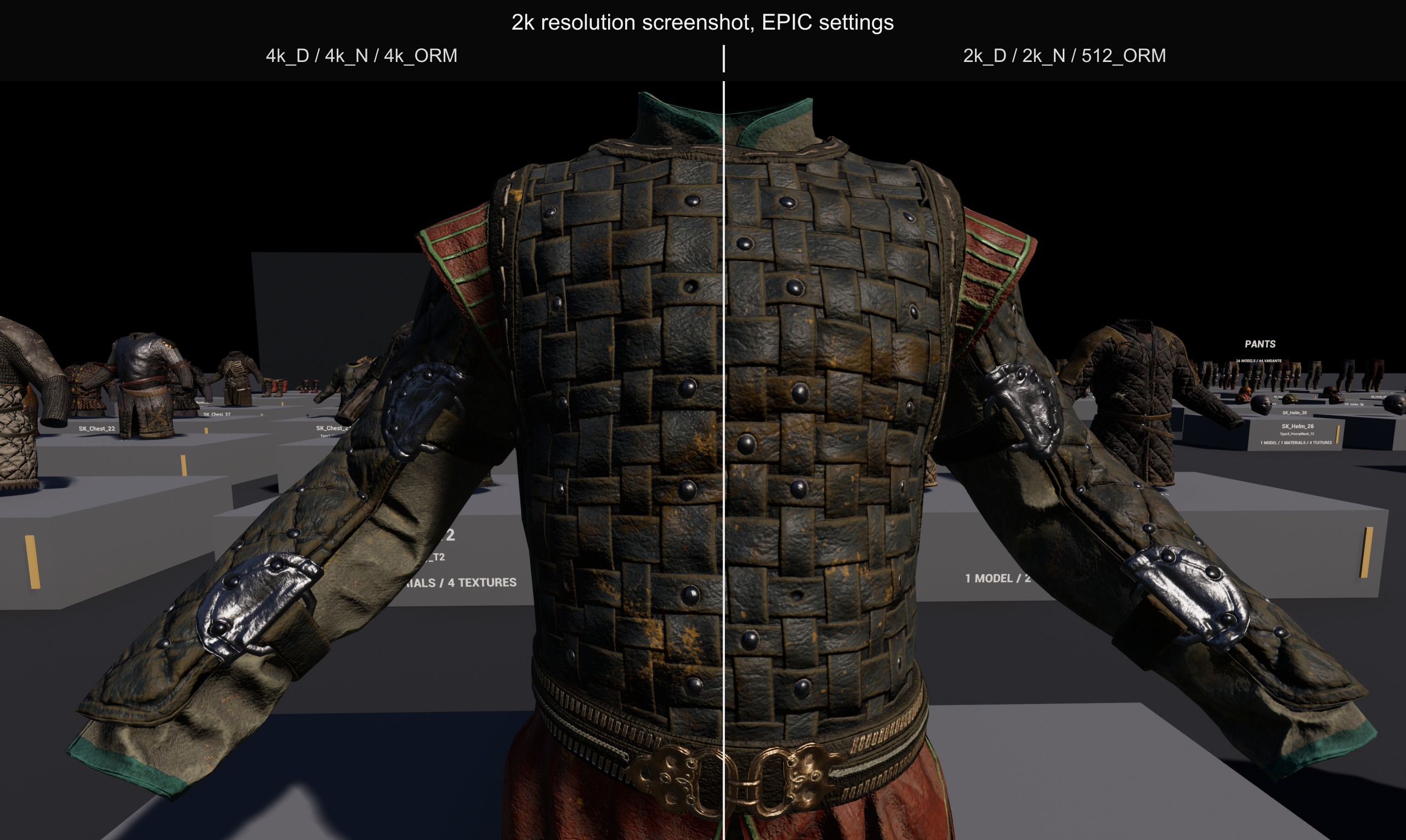
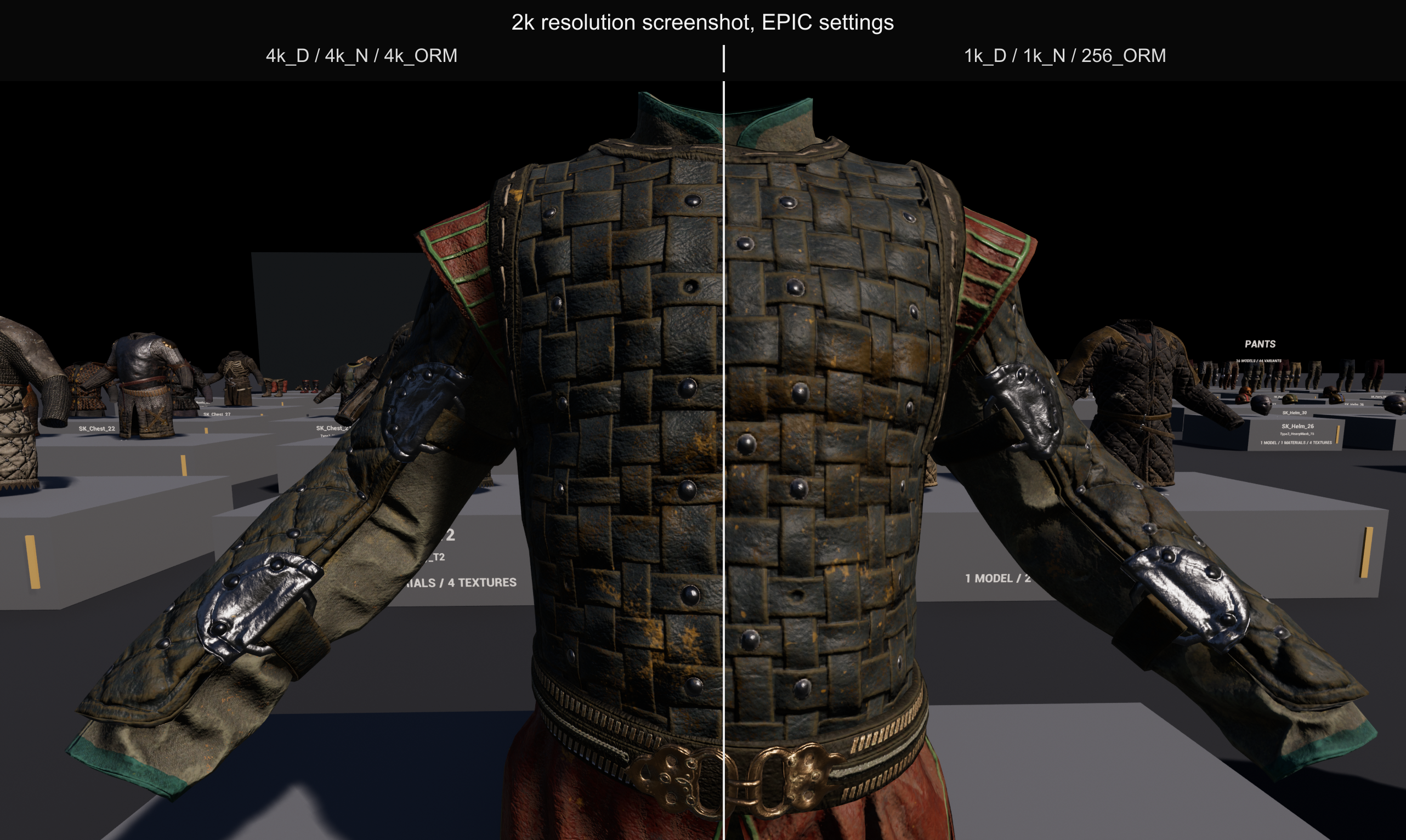
Click either image to open its full 2564 × 1532 resolution. A visible divider separates the original halves.
Meshes and simulation#
Equipment uses four mesh LODs. Check silhouette, clothing sections and material transitions at your gameplay distances. Hide covered body/equipment layers and limit cloth evaluation where it contributes little to the result.
Profile a complete moving outfit with the number of characters your game needs. Material overrides do not by themselves reduce draw calls, and pose sharing does not remove the rendering cost of modular parts.